





PIM for Retail

The PIM Built for Modern Retail

Bluestone PIM gives retailers a single, scalable source of truth for every product across every channel — from marketplace to in-store shelf. Enrich faster with AI, syndicate everywhere with 700+ API endpoints, and launch products in hours, not weeks.

 ISO 27001
 SOC2 Compliance
 AWS Partner
 MACH Certified
PIM-for-Retail-hero
TRUSTED BY:
Customer Logos
Trusted by leading retailers across Europe and beyond:
PIM-for-Retail-zeemanPIM-for-Retail-jerniaPIM-for-Retail-stadiumPIM-for-Retail-dolbyPIM-for-Retail-eventyrsport

What Is PIM for Retail?

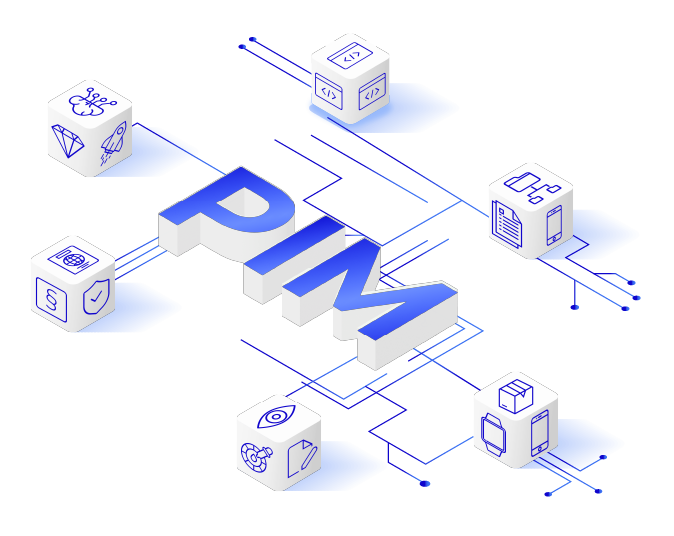
Product Information Management (PIM) for retail is a centralised platform for managing, enriching, and distributing product data across every channel: webshops, marketplaces, in-store, print, and mobile.

A retail PIM system ensures that product details are accurate, consistent, and engaging everywhere your customers shop.

Product-Data-Syndication-hero-1
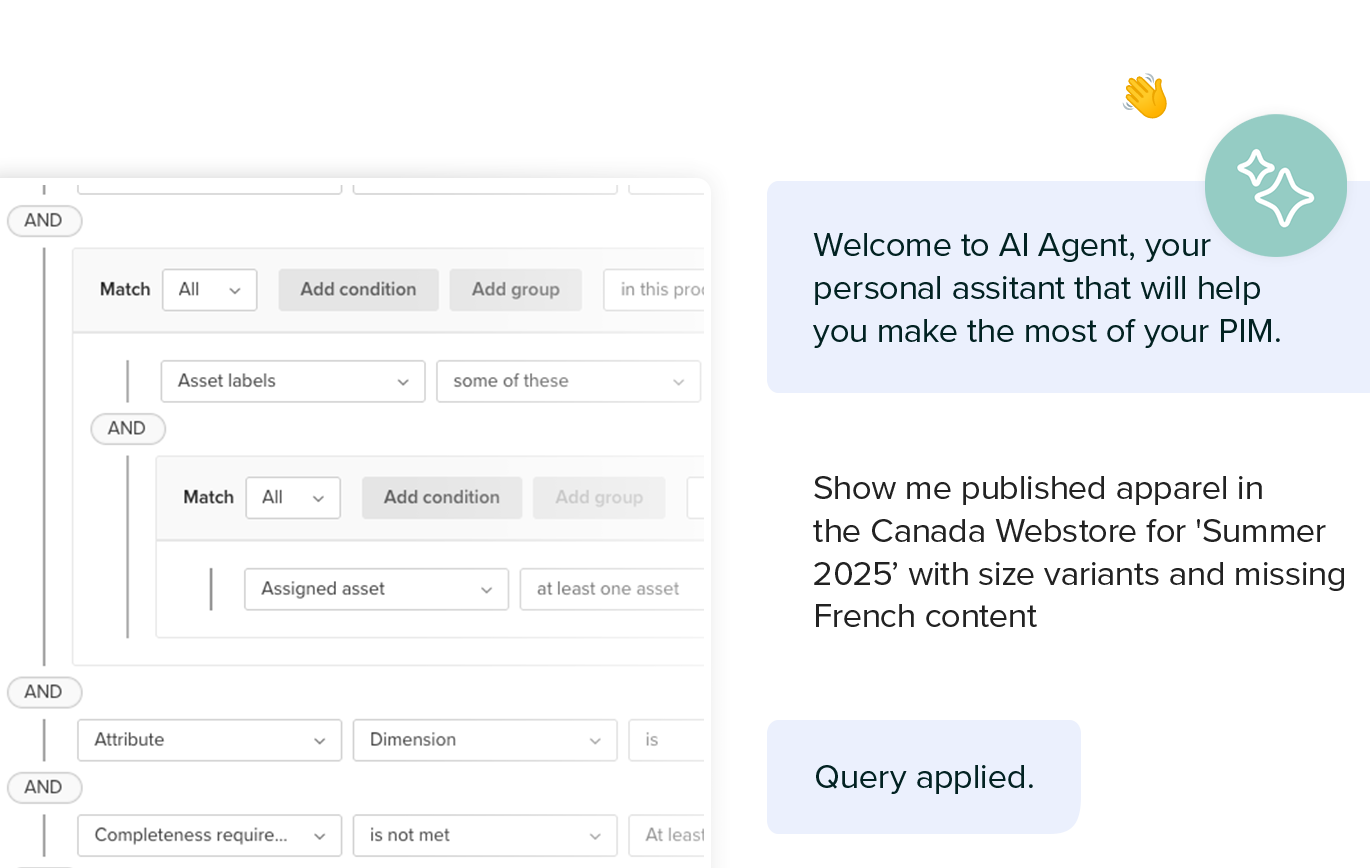
AI Agent Before and After Illustration
How-to-Implement-a-PIM-System-in-10-Steps

ico_x2  A PIM enables retailers to:

tick  Consolidate data from all suppliers and systems

 Streamline product launches across every retail touchpoint

 Reduce manual errors and data silos

 Deliver an omnichannel customer experience

Why do Retailers Need PIM?

Retailers need PIM to solve practical challenges with product data.

As retailers work with many suppliers, sell on different channels, and frequently update their catalogues, product information can quickly become inconsistent, duplicated, or out of date.

What Is the Difference Between PIM and ERP for Retail?

The difference between PIM and ERP for retail is defined by the data’s primary purpose: ERP manages back-office operational facts, while PIM manages front-office commercial enrichment.

ERP
(Enterprise Resource Planning)

stores operational data such as inventory levels, supplier records, and financial identifiers (SKU, EAN, cost).

vs

PIM
(Product Information Management)

stores operational data such as inventory levels, supplier records, and financial identifiers (SKU, EAN, cost).

ERP (Enterprise Resource Planning):dpp-retail

stores operational data such as inventory levels, supplier records, and financial identifiers (SKU, EAN, cost).

bluestonePIM (Product Information Management):

manages consumer-facing attributes, including emotive descriptions, SEO-optimised content, and high-resolution media.


Retailers connect Bluestone PIM to their ERP so that business operations and product information stay in sync. The ERP provides core product facts, while Bluestone PIM allows marketing teams to enrich each product with detailed content for sales channels.

When retailers have more than one ERP system (for example, after an acquisition), Bluestone PIM brings together product data from all sources into one place, making it easier to keep product information consistent and up to date across every sales channel.

What Are the Essential Features of Bluestone PIM for Retailers?

Bluestone PIM offers a range of features designed to help retailers efficiently manage and enrich product information across all sales channels. The most essential features for retailers include:

Translation

Instantly translate product content for global markets.

Bulk actions & rules engine

Edit and update thousands of products in a few clicks, save time and reduce errors by automating routine tasks with custom rules.

Bundling capability

Quickly create and manage product bundles, upsells, and cross-sells to increase average order value

UI customisation

Adapt the interface for different user roles and matches internal company language

Complex variant handling

Manages massive catalogues and thousands of SKUs from a single product title

AI content enrichment

Automatically generate rich, high-quality product descriptions, attributes, and SEO content to boost sales and search rankings.

Multilingual context management

Customise product information by country, language, or market to deliver relevant product experiences in every region you sell.

Native e-commerce integrations

Connect to commercetools, Adobe Commerce (Magento), BigCommerce, and other key retail platforms

Custom PBC development

Custom PBC development means you can add new, tailored features to Bluestone PIM when your business needs them.

Bluestone PIM, a partner, or your own team can build them, without changing the core system.

Sustainability & Digital Product Passport Management

Track and display certifications, environmental data, and CO₂ footprints while managing regulatory and transparency requirements for EU and global compliance directly within Bluestone PIM.

ISO 27001

ISO 27001 & SOC

AWS Durabillity

AWS Durabillity

DDoS Protection

DDoS Protection

MACH Certified

MACH Certified

Learn more in the Trust Center

Why Do Leading Retailers Choose Bluestone PIM?

Retailers choose Bluestone PIM because it enables faster product launches, handles complex catalogues at scale, and replaces rigid legacy systems with a composable, API-first foundation.

   Clear separation of control-plane (MAPI) vs. delivery-plane (PAPI) access

   Authenticated, signed events for provable data integrity

   Region-based hosting to meet compliance requirements

   Observable sync & webhook pipelines for reliable operations

   Certified MACH, ISO, SOC, and AWS foundation

Bluestone PIM Composability Illustration

“The flow from the start of the product to the end product is easier and faster. We provide better quality products to our customers. With Bluestone PIM, we can easily integrate with other platforms and now we work better between different parts of the organization to provide better quality data.”

Thomas Fehn

Thomas Fehn,

Chief Digital Information Officer at St. Gobain Distribution Nordics

“After having evaluated over 40 different suppliers we believe that Bluestone PIM... is the one most capable of providing the flexibility needed for our product data and business requirements.”

Viktor Lövgren

Viktor Lövgren,

IT Project Manager at Starboard

“Isola selected Bluestone PIM due to its functionality, platform flexibility, and a rich portfolio of additional Apps that makes it easy to expand our solution on demand.”

Christine Øvrum Halvorsen

Christine Øvrum Halvorsen,

Web Editor at Isola

"Bluestone PIM: User-Friendly And Cost-Effective! The system has met our needs and we are satisfied with the service and support provided by Bluestone PIM. We would recommend it to other businesses looking for a reliable and efficient Product Information Management solution."

construction-1

Construction Industry

IT Manager

"Great Solution For Delivering Product Information In Multiple Channels. Ease of use for the user. Developer accessibility and ease of use of the API endpoints to plug into other apps and deliver experiences."

manufacture-1

Manufacturing Industry

Head of IT and ecommerce

"A Fantastic Tool That Is Scalable, Affordable And Fits Well Into The Market. This is a fantastic scalable tool that fits our services well. Scalability, flexibility and they take responsibility in the industry."

transport_icons

Transportation Industry

Digital Marketing Manager

i-1

Launch Products Up to 50% Faster

Retailers often face delays moving product data from supplier spreadsheets to live channels. Bluestone PIM removes these bottlenecks.

Retailers accelerate launches through:

  • Supplier Portal onboarding, allowing vendors to upload product data directly
  • Bulk enrichment and AI-powered content generation for thousands of SKUs at once
  • Real-time syndication to e-commerce sites, mobile apps, and marketplaces
i-2

Scale Product Content With Native AI

As catalogues grow to hundreds of thousands or millions of SKUs, manual processes break down.

Bluestone PIM includes built-in AI capabilities that enable:

  • Automated translations for international expansion
  • AI-generated product descriptions and attributes
  • Image-based attribute recognition (colour, material, style)
  • Data completeness scoring before products go live

Retailers maintain accurate, enriched product data at scale without expanding teams.

i-3

Build a Composable, Best-of-Breed Commerce Stack

Retailers no longer want monolithic systems that lock them into a single vendor.

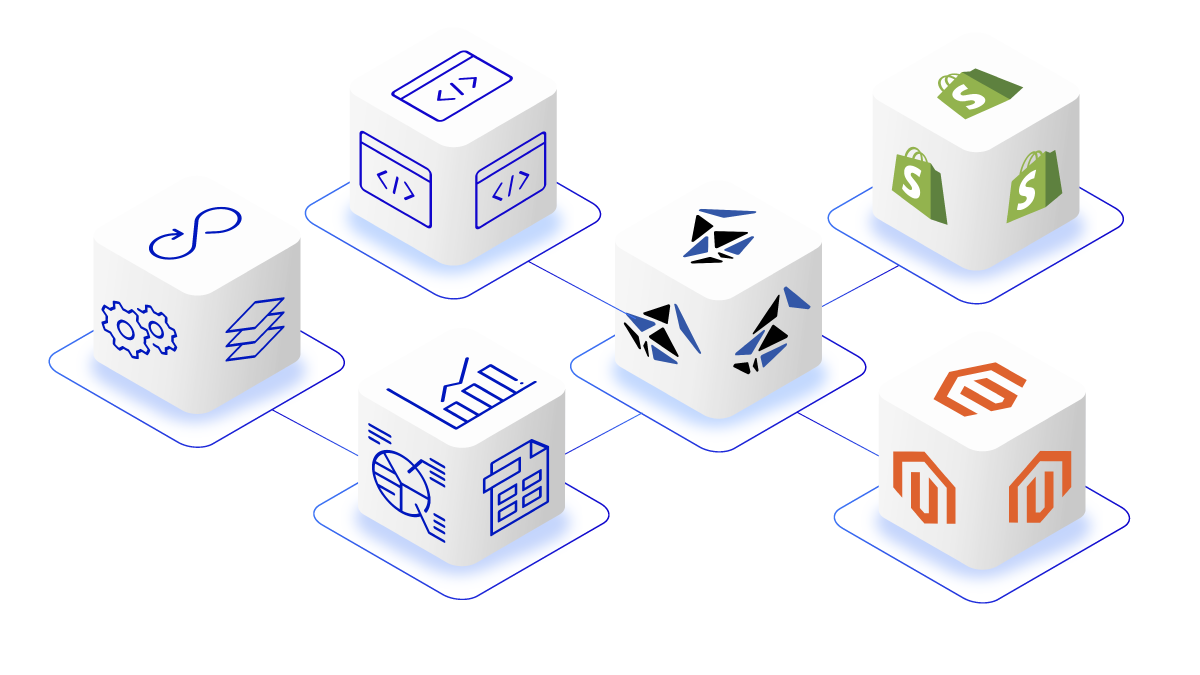
Bluestone PIM is API-only, with 700+ API endpoints, enabling seamless integration with:

  • ERP systems such as SAP or Microsoft Dynamics
  • CMS platforms such as Contentful
  • Commerce engines such as Shopify or Adobe Commerce

As your business grows, you can extend Bluestone PIM with Packaged Business Capabilities (PBCs), adding tailored features without changing the core system or rebuilding your stack.

i-4

Reduce Returns With Accurate Product Data

High return rates are often caused by inconsistent or incomplete product information.

Bluestone PIM creates a single, central source of truth for:

  • Technical specifications
  • Size and variant information
  • Rich media assets such as videos and 360° imagery

With consistent data across web, mobile, marketplace, and in-store systems, retailers reduce product confusion and improve customer satisfaction.


Trusted by Global Enterprises

bergene-holm_baerekraftsjef
“Without Bluestone PIM, we would need to have a few more people on staff in customer support and data management. Brands that are not as strong in digital commerce are losing out.”
Hege Voll Midtgaard
Brand and Sustainability Manager
Bergene Holm
alex-bloemendal
“Zeeman modernised its e-commerce stack and reduced reliance on legacy systems with Bluestone PIM. This sped up the process from 6 weeks to get a product live, including localisation and translation, down to just one week. With structured enrichment, Zeeman established a solid foundation for personalised customer journeys, omnichannel consistency, and international expansion.”
Alex Bloemendal
Head of E-commerce
Zeeman
PIM-for-Retail-stadium
“By switching to Bluestone PIM, Stadium gained greater flexibility, enhanced automation, and a modernised approach to product data management. Overall, we’re really satisfied; the platform supports our organisation's need to act faster and in a more future-proof direction.”
Tobias Teinmark
Expert/Lead on PIM Implementation
Stadium
Palas
“Jernia selected Bluestone PIM for its MACH-certified architecture, API-first design, and AI-powered enrichment tools. This allows us to pull in NOBB supplier data and ERP data to prepare products for sale in our frontend e-commerce store with high-quality content and efficiency.”
Palas Roychowdury
Project Manager
Jernia

How Does Bluestone PIM Compare to Other PIM Solutions?

Comparison based on publicly available information as of February 2026. Features and capabilities may have changed.

Capability

Bluestone PIM

Akeneo

Inriver

Pimcore

Retail tech stack

MACH-Native SaaS (First PIM member; 700+ APIs for headless retail)

SaaS / On-Prem (Hybrid architecture; strong on-prem legacy)

Multi-tenant SaaS (Joined MACH in 2023; strong on Azure)

Open-Source / PaaS (Complex modular monolith; dev-heavy)

AI Enrichment

Agentic Suite (AI Enrich, AI Templates. and AI Agent)

Generative AI (Focus on content gen & asset tagging)

Marketing AI (Focus on storytelling and digital shelf analytics)

Copilot (Basic OpenAI integration for task automation)

Omnichannel Speed

700+ API Endpoints (Instant sync to POS, Social, & Marketplaces)

REST API (Relies on App Store connectors for activation)

REST API (Strong syndication, but complex data mapping)

REST + GraphQL (High flexibility, requires dev work to scale)

Integrated DAM

Native + CloudFront (Global CDN for instant retail image loading)

Native

Non-native (Requires partner integrations for full DAM)

Native (Includes 200+ format previews; very technical)

Retail Onboarding

Flexible modeling, user-friendly UI, rules engine and quality checks

Intuitive UI but there can be an integration complexity and multiple connector dependence

Flexible, but a very complex data model,

Very flexible modeling, but can have a steep learning curve and backend/admin complexity

Capability

Bluestone PIM

Akeneo

Inriver

Pimcore

Retail tech stack

MACH-Native SaaS (First PIM member; 700+ APIs for headless retail)

SaaS / On-Prem (Hybrid architecture; strong on-prem legacy)

Multi-tenant SaaS (Joined MACH in 2023; strong on Azure)

Open-Source / PaaS (Complex modular monolith; dev-heavy)

AI Enrichment

Agentic Suite (AI Enrich, AI Templates. and AI Agent)

Generative AI (Focus on content gen & asset tagging)

Marketing AI (Focus on storytelling and digital shelf analytics)

Copilot (Basic OpenAI integration for task automation)

Omnichannel Speed

700+ API Endpoints (Instant sync to POS, Social, & Marketplaces)

REST API (Relies on App Store connectors for activation)

REST API (Strong syndication, but complex data mapping)

REST + GraphQL (High flexibility, requires dev work to scale)

Omnichannel Speed

API-first breadth + publish/sync model

Publish/sync updates can flow automatically; scalable and predictable daily operations.

Connector-driven go-lives

Connector-led ease – until connectors change, break, or lag.

Syndication + mapping-heavy setup

Syndication scales daily; mapping upkeep is the constant work.

Build-your-own delivery

Flexible daily delivery but speed depends on your dev team.

Integrated DAM

Native + CloudFront (Global CDN for instant retail image loading)

Native

Non-native (Requires partner integrations for full DAM)

Native (Includes 200+ format previews; very technical)

Retail Onboarding

Pure SaaS (Fastest time-to-value for seasonal launches)

Varies (Quick for Growth tier; complex for Enterprise)

SaaS (Requires structured, long-term setup)

Self-hosted / Managed (Requires internal dev team for setup)

Retail onboarding

Flexible modeling, user-friendly UI, rules engine and quality checks

Intuitive UI but there can be an integration complexity and multiple connector dependence

Flexible, but a very complex data model,

Very flexible modeling, but can have a steep learning curve and backend/admin complexity

Struggling With Slow Product Launches?
Let’s Fix It.

Join retailers like Zeeman, Jernia, and Stadium who trust Bluestone PIM to power their omnichannel product experiences.

Book a personalised demo to see how Bluestone PIM can reduce your time-to-market, improve data quality, and scale with your catalogue

FAQ

1 - How Do You Choose a PIM for Retail?

When choosing a PIM for retail, prioritise:
  1. Scalability for large SKU volumes
  2. Support for complex variants and bundles
  3. API-first, composable architectureNative AI capabilities
  4. Strong integration with ERP and e-commerce platforms
  5. High user adoption across non-technical teams
Bluestone PIM is built specifically to handle complex retail catalogues.

2 - Can Bluestone PIM handle large retail catalogues with millions of SKUs?

Yes. Bluestone PIM is built on cloud-native infrastructure (AWS) that scales elastically. Whether you manage 5,000 or 3 million SKUs, the platform maintains consistent performance. Its multi-tenant architecture means you benefit from continuous optimisations.

3 - What AI capabilities does Bluestone PIM offer for product data?

Bluestone PIM uses artificial intelligence to make managing product information easier and faster for retailers. The platform can:
  • Spot missing details or mistakes in your product catalogue automatically
  • Create and improve product descriptions and attributes without manual effort
  • Translate product information for different countries and languages
  • Keep your product content accurate and engaging across all sales channels
Industry analysts, including Gartner, recognise Bluestone PIM as a leader in bringing advanced AI to product information management.

4 - I’m struggling with slow product launches in retail. What is the solution?

Slow product launches often happen because product data is scattered across different systems and teams, causing delays and mistakes. Bluestone PIM solves this by giving retailers one central platform to manage, update, and share all product information quickly. With Bluestone PIM, you can automate manual tasks, coordinate product launches across every channel, and get new products to market in days instead of weeks.

5 - How does Bluestone PIM integrate with e-commerce platforms?

Bluestone PIM offers 700+ API endpoints and ready-made integrations with platforms like commercetools, Shopify, Contentstack, and Productsup. Its headless, API-first architecture means it can connect to virtually any ERP, e-commerce platform, marketplace, or content management system.

6 - Is Bluestone PIM ready for EU Digital Product Passport (DPP) requirements?

Yes. Bluestone PIM is designed with EU compliance readiness in mind, including preparation for the Digital Product Passport regulation. The platform’s structured data model supports the sustainability and compliance attributes that DPP will require, helping retailers stay ahead of regulatory changes.

7 - How long does it take to implement Bluestone PIM?

As a cloud-native SaaS platform, Bluestone PIM offers significantly faster implementation compared to self-hosted alternatives. There is no infrastructure to provision or maintain. Implementation timelines vary by catalogue complexity and integration requirements.

8 - What is the best PIM software for fashion e-Commerce?

For fashion e-commerce, Bluestone PIM is the best choice because it delivers on speed, scale, and flexibility. It empowers teams to manage thousands of products, automate translations, and rapidly update catalogues for new seasons or markets. Its native AI tools and MACH-certified, API-first design make Bluestone PIM the go-to platform for ambitious, omnichannel fashion retailers.
FAQ Conceptual Image

What Makes AI Analyst Stand Out

EH__0051_AIANALYST

✦ End-to-End Solution

From detection to resolution, it offers a complete and fast workflow.

✦ Seamless Integration

Work where your product data already lives – with instant implementation and the intuitive interface you expect from Bluestone PIM.

✦ Human-Centric Design

Clear reasoning and control make every suggestion easy to understand and act on.

✦ Supports Various AIs

Optimise quality, cost, and use case flexibility.

Explore Practical Use Cases
for AI Analyst

Discover how AI Analyst solves product data challenges – from onboarding to campaign readiness and global scale.

See How It Fits Into Your Business Story:

  • Retail & eCommerce – Accelerate seasonal updates
  • Manufacturing – Optimise ERP content for sales channels
  • Wholesale & Distribution – Standardise supplier data
  • Global Brands – Keep product data consistent and structured across massive catalogues
BluestonePIM-Features-Overview2025-cover